DESTINATIONS
Marmaris & Dalyan
THE REGION
WHAT MAKES IT WORK
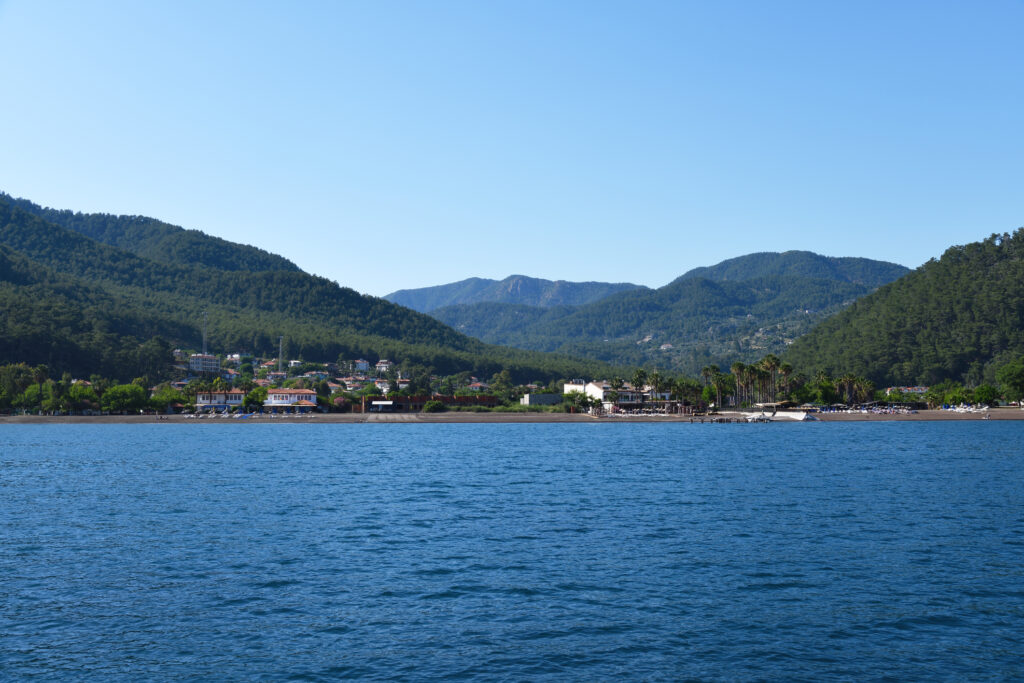
Ekincik
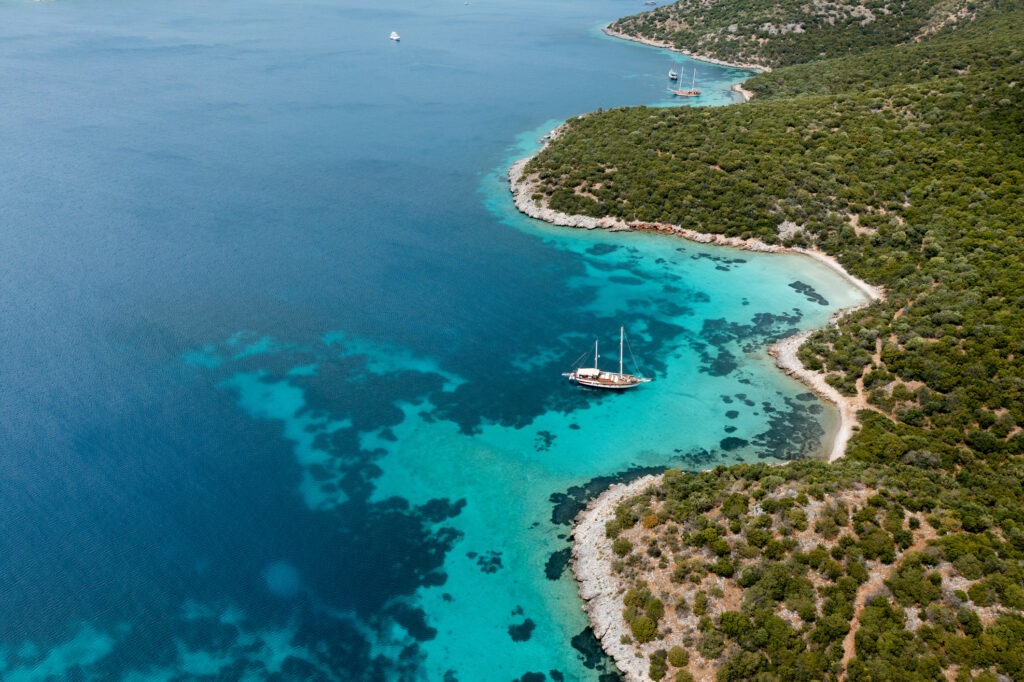
Bozburun
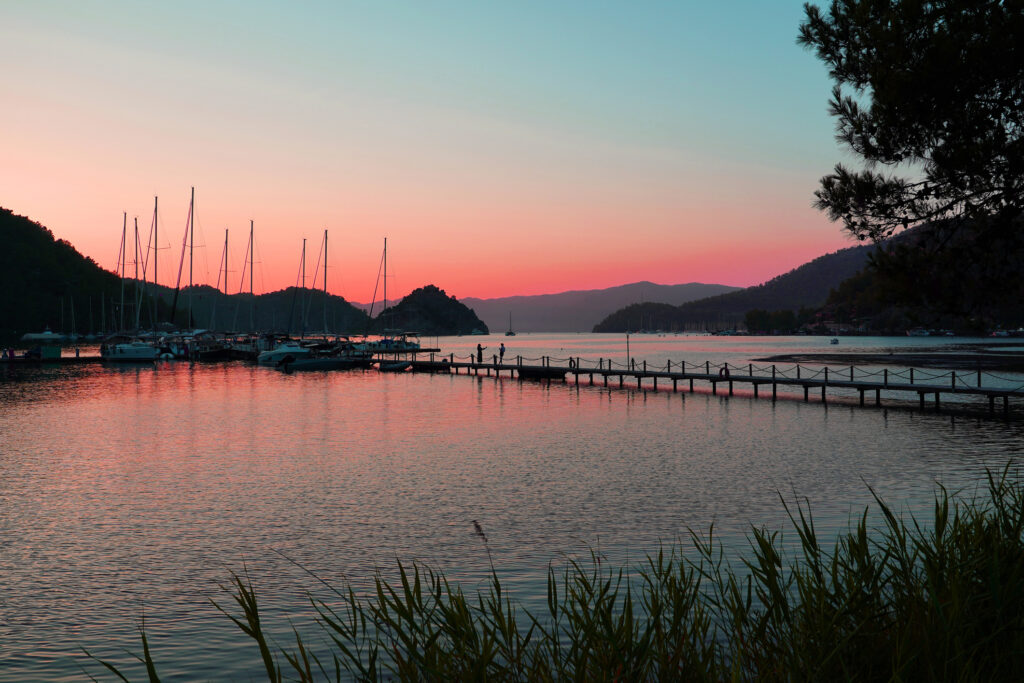
Kadırga Bay
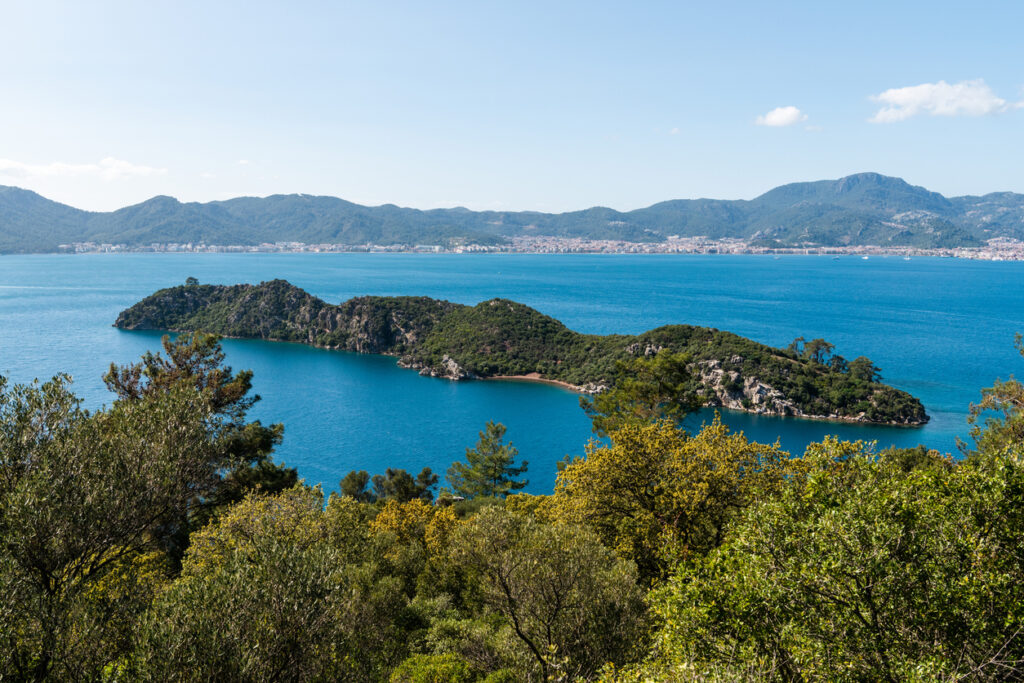
Paradise Island
WHAT'S ON SHORE
Faces in the cliff
The Lycian rock tombs at Dalyan rise directly above the river. You see them from the boat carved into the cliff face, monumental, silent, older than anything else on the water.
Where the turtles return
İztuzu beach is one of the last Mediterranean nesting grounds for Caretta caretta. The beach is protected, the access is timed, and the sand stretches for nearly five kilometres.
A river, not a road
The approach to Dalyan is by boat through a reed-lined river channel. The pace drops, the sound changes, and by the time you arrive, the coast you left feels very far away.
Mud and mineral water
The thermal springs at Sultaniye sit at the edge of the lake. The mud is rich in sulphur, the water is warm year-round, and the tradition goes back to the Romans.
A fortress with two views
Marmaris Castle sits above the old town with a clear line of sight across the harbour and out to the islands. The archaeology museum inside is small and well-kept.
The forest above the bay
The hills behind Marmaris are denser than most guests expect. Short trails lead to viewpoints where the coastline unfolds below; pine, rock, and blue in every direction.
An island with old stones
A Roman amphitheatre, temple ruins, and a beach with sand found nowhere else on this coast. Sedir Island makes archaeology and swimming feel like the same activity.
The quiet side of the harbour
Marmaris empties out if you know where to look. The old bazaar, the back streets above the marina, and the tea gardens near the castle belong to a slower version of the town.
A swim between the islands
The small islands off Marmaris are close enough to reach by tender and empty enough to feel private. We pick the one the wind leaves alone warm rock, clear water, no plan.