DESTINATIONS
Datça & Bozburun
THE REGION
WHAT MAKES IT WORK
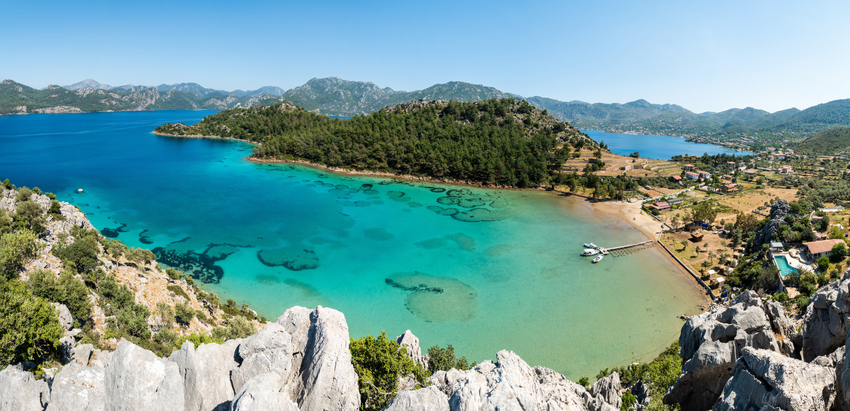
Selimiye
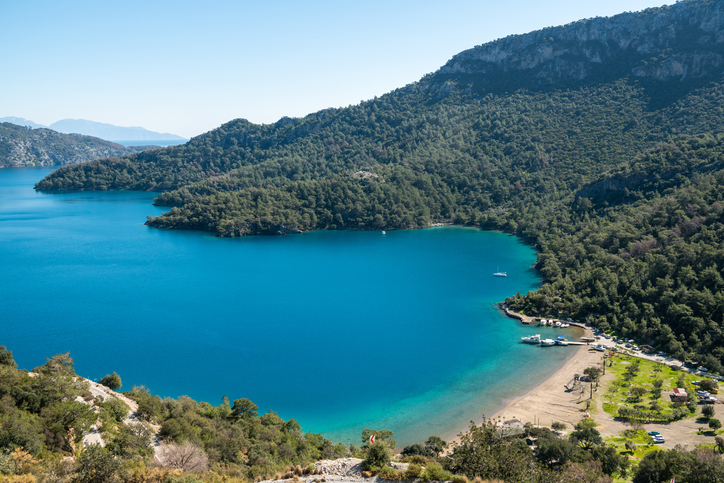
Bozukkale
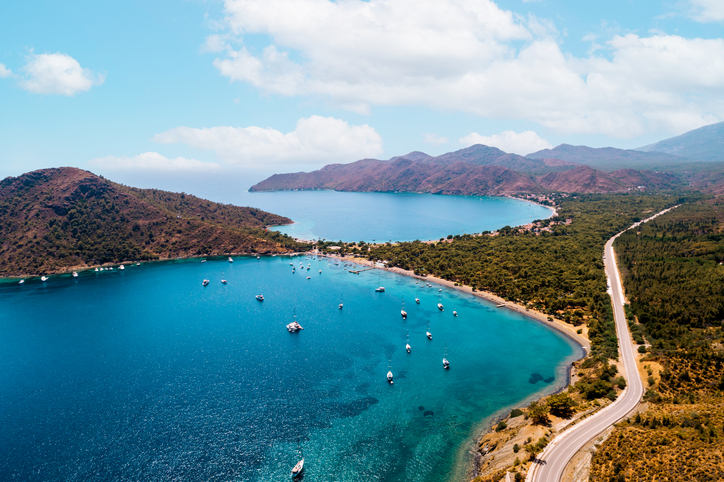
Orhaniye
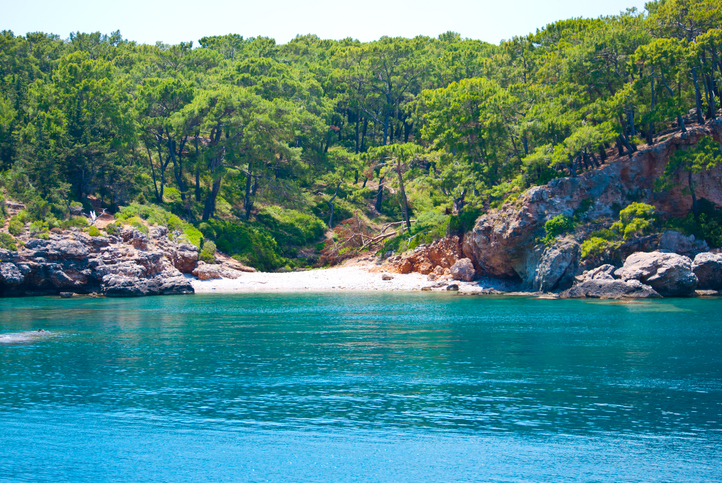
Palamutbükü
WHAT'S ON SHORE
An abandoned harbour
Fortress walls still frame the entrance to a harbour so well protected that navies fought over it for centuries. Now it belongs to the wind and a few anchored yachts.
Walking on water
At Kızılkum, a sandbar sits just beneath the surface of the bay. You walk across it waist-deep in turquoise, the far shore getting closer with every step. No one believes the photos.
Where the hulls are born
Bozburun's boatyards still shape gulets by hand timber frames, copper nails, and a tradition older than the tourism it serves. We visit when the yards are working.
Tables at the water's edge
Selimiye's restaurants hang over the bay on wooden platforms. The fish is local, the wine is cold, and the view across the water doesn't change from the first course to the last.
The sponge diver's village
Before the yachts came, Bozburun lived on sponge diving. The tradition has faded, but the village still carries that character unhurried, self-contained, and built around the harbour.
A bay named after a voice
One of the coves near Bozburun carries the name of a famous Turkish singer. The story is local, the bay is quiet, and the anchorage is one of the most sheltered on this coast.
Almonds and stone walls
The interior of the Datça peninsula looks nothing like the coast. Narrow roads wind through groves and abandoned villages, and the air smells different; drier, warmer, older.
The narrowest point
The peninsula narrows to a few hundred metres between two gulfs. The ancients tried to cut a canal here. The walk across takes twenty minutes and two thousand years.
An evening without a plan
Some of the best nights on this coast have no agenda; a village quay, a table that appears, a conversation with the owner. Söğüt and Selimiye are good at this.